
Ice Dam Roof Warning Signs & Prevention
Winter weather can place enormous stress on residential roofing systems. While snowfall may create a picturesque landscape, it can also lead to serious structural problems. One of the most damaging cold-weather roofing issues homeowners face is an Ice Dam Roof condition.
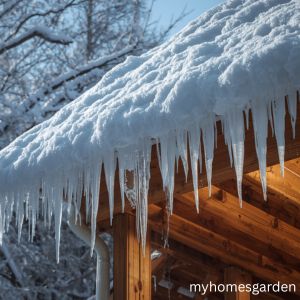
Freshly fallen snow, adding powderpuff layers to the pillowed roofs of snow-country houses, is the building material of artists and poets. So, too, are the ornamental eaves strikingly decorated with ice-formations glistening in the sun as winter slowly progresses.
The cozy quaintness of the fairyland decorations unfortunately often transforms into a destructive nightmare of roofs leaking profusely at subzero temperatures; sidewalls soaked, stained, blistered, and rotting; interior plaster tarnished, cracked, or spalling; and distraught homeowners with no effective methods to prevent a reoccurrence.
Expensive redecoration and casualty insurance to help sop up the costs are the distressed homeowners’ only choices of action. Therefore, understanding how ice dams form, recognizing early warning signs, and learning Ice Dam Roof prevention strategies are essential for protecting homes.
Additionally, knowing how to stop Ice Dams from damaging roof can save homeowners substantial expenses. This guide explains the risks, symptoms, solutions, and long-term protection methods every homeowner should know.
What Is an Ice Dam Roof Problem?
Ice-dams develop on roof or buildings whenever and wherever roof-snow accumulates on roofs to depths of an inch or two and when the weather turns or remains generally below freezing for 3 or 4 days.
No precise limits of snow-depth and temperature conditions have been determined, nor would such specific limits be significant, wide variations in the range of roof-snow depth and temperature depend on the whims of nature, the direction and velocity of winds, and the shape of the roof.
In general, the deeper the snow, either by single incident snowfall or by accumulations, and the lower and more persistent the subfreezing temperatures, the more inevitable and sizeable are the ice formations for typical houses
As a result, trapped moisture penetrates the underlayment and enters the home. Over time, this process causes water stains, insulation damage, mold growth, and wood rot. In other words, ice dams turn surface snow into a serious leak hazard, which often leads to Ice Dam Roof repair if ignored.
How Ice Dams Form: Understanding the Root Causes
Before discussing solutions, it is important to understand why ice dams occur.
1. Warm Air Leakage in the Attic
Warm indoor air rises and escapes into the attic through gaps around light fixtures, vents, wiring openings, and attic hatches. Consequently, the upper roof surface becomes warmer than the lower edge.
2. Irregular Roof Temperatures
When snow melts on warmer upper sections and refreezes at colder eaves, a dam begins to form. Repeated freeze–thaw cycles make the ice layer thicker.
3. Inadequate Insulation
Poor insulation allows continuous heat loss. Therefore, snow keeps melting and feeding the ice buildup.
4. Poor Ventilation
Attic heat becomes trapped without proper airflow. As a result, roof temperature regulation fails, increasing the likelihood of an Ice Dam Roof condition.
5. Clogged Gutters
Debris-filled gutters trap water, which freezes and contributes to ice blockage, further emphasizing the importance of Ice Dam Roof prevention.
Identification of Ice Dam Roof Damages
Recognizing early symptoms allows homeowners to act quickly and prevent major structural damage.
Ice Accumulation
Icicles, sparkling in the sun of mid-winter days, are only indicators of the interactions of roof-snow, the efficiency of ceiling insulation, and the effects of warmed attic spaces.
Decorative icicles hanging beyond the eaves are solidified snow-water that is out and over the dams and are hazardous only to those who carelessly knock them down.
Roof-ice glacier actions
The visible troublemaker on snow-decked buildings is the massive ice formed from successive flows of roof snow-water freezing as it emerges from the protective insulating blanket of roof snow.
The disruptive forces of expanding ice-actions may damage roof shingles and the roof-deck. The glacierlike forces on roofs and in valleys deserve better consideration by building designers.
Rain gutters
Rain gutters (eaves troughs) are often condemned as responsible for ice-dammed eaves. Concentrated overloads at the eaves may be contributed to by ice-filled rain gutters.
Massive ice in (and around) eaves troughs inevitably slow melting and interferes with desirable roof drainage and runoffs; however, rain gutters, like icicles, are simply symptomatic of snow-water actions, rather than causative.
Snow-water penetrations
Penetrating snow-water often seeps down rafters, along plates, into wall cavities, and saturates sidewall insulation to reduce its efficiency, passes into and through sheathing-siding as either water or vapor, and may stain or blister the thin skins of paint to effect a thoroughly undesirable appearance and a lowered protective performance.
The ultimate damage through rotting of structure by successive waves of snow-water attacks may destroy the building, even when cosmetically covered with vapor and water-impervious materials.
Ceilings Water Stains
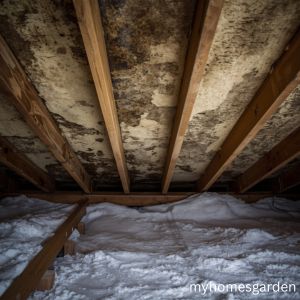
Brown or yellow stains indicate that water has seeped through roofing layers.
Flaking Paint or Distorted Drywall
Moisture infiltration causes paint bubbles and drywall deformation.
Eave Ice Formation
A thick ridge of ice at the roof’s edge is a classic indicator.
Stale Smells Due to Dampness
Persistent dampness promotes fungal growth, often noticeable in attics.
Ignoring these warning signs may lead to expensive Ice Dam Roof repair work later and increase Ice Dam Roof removal cost.
How to Get Rid of Ice Dams on Roof Safely
Once an Ice Dam forms, careful action is necessary.
Clear Roof Snow Using a Rake
Removing snow from the lower roof edge reduces additional melting and refreezing.
Create Melt Channels
Applying calcium chloride in a fabric tube melts pathways for trapped water to drain. This is a crucial step in learning how to get rid of Ice Dams on roof properly.
Avoid Sharp Tools
Chipping ice with tools may damage shingles and increase future Ice Dam Roof repair needs.
Professional Steam Removal
Experts use steam equipment that melts ice safely without harming roofing materials.
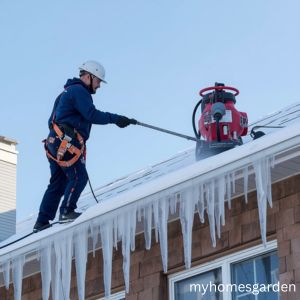
Learning how to get rid of ice dams on roof properly reduces further interior damage.
Ice Dam Roof Prevention: Long-Term Protection
There are some preventions that will protect your homes for long-term.
Ensure Proper Ventilation in Every Rafter Space
Make sure every rafter space is vented across its full width by installing properly sized vent baffles above the insulation. Continuous airflow from the soffit area upward is essential for preventing moisture buildup and reducing the risk of ice dams. Proper ventilation helps maintain consistent roof temperatures during winter.
Challenges in Homes Without Trusses
Where roof trusses are not used, achieving full ventilation becomes more difficult. In many older homes, ceiling joists are nailed beside the rafters, which makes the ventilation space narrower and uneven in width. Despite these structural limitations, proper airflow must still be established to ensure the roofing system performs effectively.
Removing Obstructions Before Installation
Before improving insulation and ventilation, remove existing insulation materials and any wood members that may interfere with airflow channels. Clearing the space ensures that new ventilation baffles and insulation can be installed without blockage, which is essential for long-term performance.
Installing Properly Sized Vent Baffles
From the ceiling edge, fit correctly sized vent baffles in each rafter bay. Ensure there is a minimum 1-inch ventilation channel maintained across the full width between each rafter and joist space. This continuous air passage allows cold air to flow freely and prevents warm air from accumulating beneath the roof deck.
Correctly Apply Spray Foam Insulation
After installing the baffles, apply low-expansion spray-in-place polyurethane foam insulation. The foam should completely fill the tapered cavity beneath the baffle and above the ceiling between the joists and rafters. Extend the insulation from the exterior wall inward, leaving sufficient depth for additional batt insulation where needed.
Benefits of Spray Foam Insulation in Tight Spaces
When installed properly, spray foam insulation provides high thermal performance — typically more than R-6 per inch. It expands into gaps, cracks, and hard-to-reach areas, significantly reducing thermal bridging. This ensures more uniform indoor temperatures and improved energy efficiency.
Air Sealing Advantages of Foam Insulation
In addition to insulation value, spray foam creates an effective air seal. This blocks unwanted air leakage, which is particularly important in older brick or block homes. In such structures, warm air often escapes upward through vertical strapping cavities between plaster and masonry walls. Proper sealing helps prevent heat loss and moisture issues.
How to Stop Ice Dams from Damaging Roof Structures
Even if ice forms, damage can be limited by acting quickly. First, remove excess snow after storms. Next, monitor ceilings for moisture stains. Additionally, check attic insulation regularly. Furthermore, maintain indoor humidity levels to reduce condensation. Finally, schedule seasonal roof inspections.
Understanding how to stop ice dams from damaging roof systems can save homeowners thousands in repair costs.
Ice Dam Roof Repair: What Happens After Damage
When water infiltration occurs, professional Ice Dam Roof repair becomes necessary.
- Replacing roof tiles and protective Layer
- Repairing insulation
- Removing mold
- Fixing drywall and ceilings
- Repainting affected areas
Early intervention reduces overall repair scope.
Ice Dam Roof Removal Cost
Homeowners frequently ask about Ice Dam Roof removal cost. Pricing depends on roof size, accessibility, ice thickness, and removal method. Steam removal is common and safer than manual methods. Investing in removal is often cheaper than repairing water damage later.

Consequences of Ignoring Ice Dams
Delaying action may result in:
- Structural wood rot
- Insulation failure
- Electrical hazards
- Mold contamination
- Higher heating bills
Therefore, prompt attention protects both safety and property value.
Seasonal Maintenance Tips
To prepare for winter:
- Inspect attic insulation
- Seal air leaks
- Clean gutters
- Check ventilation
- Schedule roof inspection
Routine maintenance supports effective ice dam Roof prevention.
Conclusion
An Ice Dam Roof issue is not merely cosmetic; it is a serious threat to home integrity. However, by recognizing warning signs, understanding how to get rid of Ice Dams on roof, and implementing strong prevention strategies, homeowners can avoid costly repairs.
Long-term roof protection is ensured by a combination of insulation, ventilation, maintenance, and professional guidance. Acting early safeguards your home, reduces expenses, and provides peace of mind throughout winter.