
Starting Seeds Indoors in February (USA Gardening Guide)
In the United States, Starting Seeds Indoors is one of the most important steps for a successful gardening season, especially for gardeners aiming for an early and productive spring. February may still feel cold in many regions, but experienced gardeners avail this opportunity because they know this month offers the perfect chance to prepare for a thriving spring garden. Understanding what seeds to start indoors in February allows you to get ahead of the growing season.
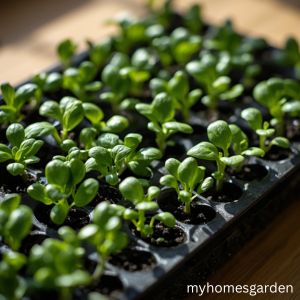
This article briefly explains Starting Seeds Indoors in February, including vegetables and flowers, while sharing practical advice and examples based on real gardening experience.
Why Starting Seeds Indoors in February Matters
A long growing season is required by many plants, so February is considered a critical month for seed starting. If you want your seeds to mature before summer heat or fall frost, you should plant these seeds in February. By choosing to Starting Seeds Indoors, gardeners can control temperature, moisture, and light, factors that significantly influence plant health.
Moreover, Starting Seeds Indoors:
- Encourages earlier flowering and fruiting
- Produces stronger root systems
- Reduces transplant shock
- Saves money on nursery plants
From my experience, direct-sown plants are often outperformed by plants that are started indoors in February, particularly tomatoes and peppers, which are greatly benefited by early establishment.
Understand Your USDA Hardiness Zone
It is essential to understand your USDA Hardiness Zone before selecting seeds to start indoors in February. Gardeners in Zones 6 through 10 typically have the most flexibility, while those in colder zones require added warmth and light.
However, regardless of location, indoor seed starting requires proper conditions. Ideal spring conditions can be mimicked even in colder climates by using grow lights, heat mats, and humidity domes.
Vegetable Seeds to Start Indoor in February
Choosing the right vegetables is essential when planning early indoor seed starting. The following vegetable seeds to start indoor in February are ideal for gardeners across the USA.
Bean
Lima, Snap, Shell, Garbanzo, Dry, Adzuki, Soy, Broad, Runner, and Mung
Pollination: Both male and female organs are contained in blooms. Normally pollination occurs before the flower opens, so cross-pollination is uncommon. If absolute purity is desired, separate varieties by another crop or 100 feet.
Culture for Seed: Culture of seed is same as for the edible crop, planting early in the North ensures maturity before frost.
Seed Production: Seeds formation and enlargement begin after pod formation. On average, seeds will be mature and plants ready to harvest about 1½ months after the “snap bean” stage.
Tomatoes
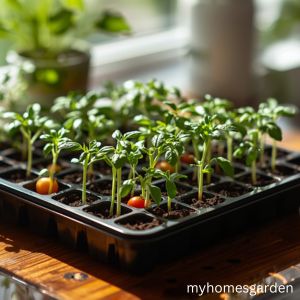
Tomatoes are the most popular crops for Starting Seeds Indoors. February is the best time to sow them, as tomatoes need approximately 6–8 weeks of indoor growth before transplanting.
Why start tomatoes early?
Tomatoes develop stronger stems and deeper roots when sown early, resulting in healthier plants and earlier fruit production.
Gardener insight: In my own garden, seedlings of February-started tomato consistently produce fruit two to three weeks earlier than store-bought transplants.
Broccoli
The yellow flowers are ideal, containing both male and female plant parts. Flowering is observed during the summer of the first year or the late spring of the second year.
Pollination: Broccoli is usually cross-pollinated by bees. Separate two or more varieties with another tall crop or by at least 100 feet, a much greater separation if purity is necessary. Broccoli belongs to the same species as kale, cabbage, cauliflower, brussels sprouts, collards, and kohlrabi, and will cross with any of them. Commercially, high segregation distances are practiced, but for home and local use 200 feet, or certainly 1,000 feet, will be enough unless purity is essential.
Seed Production: Since flowering is most highly stimulated by the long day-lengths of early summer, it is beneficial to have the plants quite large at this date. Most industrial production of broccoli seed is done in areas mild enough to overwinter a late summer or early fall planted crop.
Most northern inland regions of approximately 42° North latitude in the United States have winters too cold to overwinter broccoli, and in these areas the crop must be planted in spring or provided winter protection such as thermal cold frames.
After formation of the edible (actually the flower buds), yellow flowers appear, after that insect pollination and seed formation happens. The seed is matured in fall from early spring plantings and in early summer from overwintered crops. Single broccoli plants are normally not self-fertile, so have at least two adjacent plants flowering to ensure seed formation.
Peppers
Flowering: Perfect flowers (having both male and female parts) and fruits containing seeds are produced the same year.
Pollination: Peppers are mostly self-pollinated. Bees may create some crosses between adjacent varieties if more attractive nectar is not available in the vicinity. Where near purity is desired, separate varieties by a tall crop and 50 feet or so.
Harvest: Pick peppers when fruits are of ripe color, at which time the seed is mature. Most bell peppers present in markets turn red when ripe. Seed may be saved from under-ripe fruits if they have first been allowed to ripen at room temperature after picking. Remove the seed mass from the fruits and allow to air dry.
Rub the seeds to separate after drying. Washing is not necessary, although it will clean seed of debris that will float.
Cauliflower, Cabbage, Eggplant, Onion
These cool-season vegetables grow best when Starting Seeds Indoors early. February sowing allows gardeners to transplant seedlings as soon as outdoor temperatures permit. Proper isolation, pollination, and seed harvesting techniques are essential for maintaining purity and productivity.
Flower Seeds to Start Indoor in February
February is the perfect time to sow ornamental plants requiring a longer growing period. Selecting the right flower seeds to start indoor in February ensures radiant and early blooms.
- Petunias: Slow germination; benefit from early indoor planting. February-started petunias bloom abundantly by late spring.
- Snapdragons: Grow well in cooler temperatures; early indoor sowing ensures they transplant well.
- Geraniums: Requires several months to mature; sow indoors in February.
- Lantana: Weeks may be required to germinate; early indoor planting produces strong plants for summer landscapes.
- Impatiens: Grow slowly at first, but February-started seedlings result in lush, colorful beds by early summer.
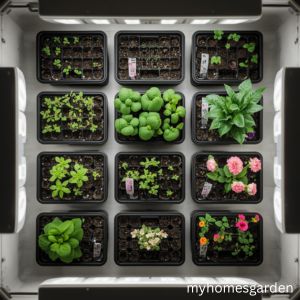
Seeds to start early for spring blooms include:
- Pansies
- Sweet peas
- Dianthus
- Lobelia
- Alyssum
From my experience, pansies started indoors in February can bloom nearly a month earlier than those sown outdoors.
Common Mistakes You Should Avoid While Starting Seeds Indoors
Even many experienced gardeners make these mistakes during Starting Seeds Indoors. Avoiding these common mistakes can improves results:
- Starting seeds too early without sufficient light
- Overwatering seedlings
- Overlooking proper temperature conditions
- Forgetting to harden off plants
Benefits of Starting Seeds Indoors in February
Selecting the right seeds to start indoors in February provides multiple benefits like advanced harvests, more vigorous plants, effective control of pests, and stronger confidence as gardener.
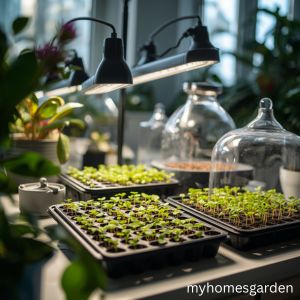
For many gardeners, Starting Seeds Indoors in February lays the foundation for a successful growing season.
Conclusion
Understanding what seeds to start indoors in February is one of the most valuable skills a gardener can develop. By carefully selecting vegetable seeds to start indoor in February, choosing suitable flower seeds to start indoor in February, and following proven indoor seed-starting techniques, earlier harvests, healthier plants, and stunning spring blooms can be enjoyed by gardeners across the USA.
Whether fresh vegetables or colorful landscapes are the goal, a powerful advantage is given by Starting Seeds Indoors in February. For more expert gardening advice, seasonal guides, and home improvement tips, continue exploring MyHomesGarden.com, your trusted source for gardening success.