
Types of Compost for Gardening That Improve Soil and Plant Growth
For a garden to be healthy and thrive, choosing the right compost is just as important as watering and sunshine. Different types of compost for gardening provide unique nutrients and benefits that improve soil quality, encourage plant growth, and increase vegetable and flower outputs.
To create rich, living soil, every decision from nutrient-rich vermicompost to environmentally friendly kitchen waste compost is crucial. This article will cover the best compost for vegetable garden, different organic compost types, and how these types of compost for gardening can improve the health, productivity, and robustness of your vegetable and flower plants while supporting effective compost for soil improvement.
Types of Compost
1. Vermicompost: Best Compost for Vegetable Garden
The solid phase breakdown of organic leftovers in an aerobic environment by taking use of earthworms’ and microorganisms’ maximum biological activity is known as vermicomposting, making it one of the most effective types of compost for gardening.
“Vermicomposting is defined as “bi-oxidation and stabilization of organic material affected by the joint action of earthworms and mesophilic micro-organisms.”
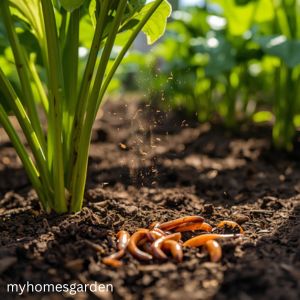
Earthworm activity produces vermicompost, which is rich in vitamins, growth hormones, proteases, amylases, lipase, cellulase, and chitinase, as well as immobilized microflora. Even after being expelled from the worms, the enzymes still break down organic materials, highlighting important vermicompost benefits.
Composition & Raw Materials Used in Vermicompost
| Categories | Material Examples |
| Wastes from Agriculture | Millet straw, wheat bran, cereal leftovers, and rice husk |
| Food Processing Waste | Canning waste, brewery waste, dairy waste, sugar industry (press mud, trash), wine waste, oilseed cake (non-edible), coffee pulp, cotton waste |
| Wood Processing Waste | Wood chips, wood shavings, sawdust |
| Other Industrial Wastes | Fermentation waste, paper waste, cellulosic waste, vegetal tannery waste |
| Local Organic Products | Coco fiber dust (coir), tea waste, rice hulls |
| Fruit Leftovers | Peels, pulp, leftover fruits and vegetables from processing industries |
Vermicompost’s Chemical Composition
| Characteristic | Value Range |
| Organic Carbon (%) | 9.15 – 17.88 |
| Total Nitrogen | 0.6 – 0.9 |
| Potassium (%) | 0.15 – 0.256 |
| Sodium (%) | 0.055 – 0.30 |
| Calcium & Magnesium (Meq/100 g) | 22.67 – 47.6 |
| Copper (mg/kg) | 2.0 – 9.5 |
| Iron (mg/kg) | 2.0 – 9.3 |
| Zinc (mg/kg) | 5.7 – 9.3 |
| Sulphur (mg/kg) | 128.0 – 548.0 |
Vermicompost’s Advantages for Improving Soil
- Prevent soil erosion, improve soil structure, and increase “Soil Organic Matter” (SOM), making it ideal for compost for soil improvement.
- Boost nutrients, microbial activity, and beneficial soil microbes.
- Increase the capacity for exchange of cations.
- Lowers soil bulk density and stops erosion and compaction.
- Inhibition of plant diseases caused by soil
- Eliminate sodicity and salt from the soil.
- Keep the soil’s pH at the ideal level
Why It Is an Organic Compost Type for Plant Growth
For the following reasons, vermicompost is the best best compost for vegetable garden and one of the most valuable organic compost types:
- Vermicompost is more nutritious than traditional composts.
- This results from the earthworms’ higher rate of mineralization and degree of humification.
- Vermicompost has a great ability for water retention, drainage, aeration, and porosity.
- Presence of microbiota particularly fungi, bacteria and actinomycetes makes it suitable for plant growth and supports compost for flowers.
Vermicompost contains nutrients like nitrates, phosphates, exchangeable calcium, and soluble potassium in plant-available forms.
- Vermicompost also contains plant growth regulators and other microorganism-produced compounds that affect plant growth.
- Earthworms that digested organic wastes produced auxins and cytokinins.
- Certain metabolites, including vitamin B and vitamin D, are released into the soil by earthworms.
- The casts have higher P, K, Ca, and Mg availability in addition to higher N availability.
Vermicompost’s impact on agricultural crop performance:
- Yield
- Growth
- Nutrient content
- Protection of plants for human health
2. Compost Tea – Compost for Soil Improvement
Sustainable farmers are very interested in using compost teas to improve crop fertility and health, making it one of the liquid types of compost for gardening. The power of this technology, which is becoming more and more popular, has been shown by years of research.
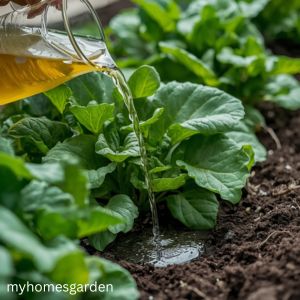
How Compost Tea Works for Plant Health
The most of us are aware of the great outcomes that compost teas may produce, but how do they actually work?
A group of aerobic microbes found in compost tea carry out several advantageous tasks, including:
- They eat the food that plants surround their bodies with. The disease-suppressive bacteria and fungi found in aerobic tea are strengthened by plant exudates from both roots and leaves, depriving disease-causing organisms of food.
- Disease-causing organisms will eventually use such exudates if pesticides and artificial fertilizers have destroyed the helpful bacteria and fungus that plants “expect” to be present around their roots. At that point, disease is widespread and difficult to manage.
- They occupy the infection sites, making it impossible for the disease-causing organisms to enter the plant’s tissues even if they do begin to proliferate.
- They take up the area surrounding the plant, making it impossible for the pathogenic organisms to live there.
- They eat microbes that cause illness.
Soluble nutrients found in compost tea serve two important purposes:
- They nourish the organisms already present in the tea, allowing them to grow more quickly, be healthier, and carry out their disease-suppressive roles more quickly.
- By feeding the plant, they improve its health and enable it to produce more food for the guys that prevent harmful organisms. The microbes in tea not only prevent illness but also provide plants with other vital advantages, making it useful as compost for soil improvement and compost for flowers.
- They keep nutrients in the soil surrounding the plants, negating the need for more fertilizer. This has an extra financial advantage since nutrients remain in the soil if they are retained in bacterial and fungal bodies.
COMPOST TEA: INGREDIENTS
- Compost
- Water
- Food
- Plant Food
TEA TESTING:
Applying a compost tea and keeping an eye out for illness is the easiest approach to determine whether it is effective. You can tell something was not working if the plants die.
The majority of us would prefer a little more confidence than that, or a little more warning when the tea is not what it should be.
Examine The Compost:
Ask the company where you purchase your compost for information demonstrating that the compost has the right kind of organisms and a good chemistry. The following organisms should be present in the compost:
| Organisms | Amount |
| Live Bacteria | 14.9 to 30 mg |
| Total Microbial Count | 150.1 to 300 mg |
| Live Fungi | 15.01 to 30 mg |
| Total Fungal Population | 150.01 to 300 mg |
| Total Protozoa Population | 51,000 individuals |
| Total Nematodes | 25 to 35 beneficials, no root-feeders |
Check The Tea
The following microorganisms should be present if the tea maker is operating properly:
| Organisms | Amount |
| Live Bacteria | 2.5 to 10.5 mg |
| Total Microbial Count | 150.01 to 300mg |
| Live Fungi | 2.5 to 10.5 mg |
| Total Fungi Population | 150.01 to 300 mg |
| Total Protozoa Population | 1,000 individuals |
| Total Nematodes Population | 6 to 30 beneficials |
3. Kitchen Waste Compost – Organic Compost Types
- The amount of resources lost is significantly reduced. In the US, food waste makes up 26% of landfill space, which has a significant impact on both the economy and the ecology, making it one of the most practical types of compost for gardening and widely used organic compost types
- Instead of throwing leftovers and scraps in the trash, you can make excellent use of them by composting them.
- Composting kitchen waste is a useful way to learn about the environment and how our daily actions affect it. It is also an excellent teaching opportunity, particularly for children who learn about the importance of recycling and sustainability.
- By enhancing soil structure for better ventilation and water retention, you produce a naturally occurring, nutrient-rich soil amendment that significantly improves crop quality.
- You stop further contamination of the land, water, and air. When kitchen waste is disposed of in landfills, methane is created.
- In a regulated environment, like a composting pile or bin, composting kitchen waste reduces greenhouse gas emissions and helps combat climate change.
- Food scraps are recycled back into the soil, closing the loop and reducing the need for chemical additions and artificial fertilizers.
- By not buying expensive fertilizers, you can lower your gardening costs.
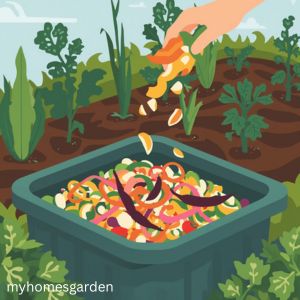
What Kinds of Food Waste Are Compostable?
- Fruit and vegetable leftovers, including peels, cores, rinds, and any inedible portions.
- Tea bags, coffee grounds, and filters as long as you take out any synthetic materials or staples before composting
- Eggshells crushed
- Nutshells from pistachios, walnuts, or almonds as long as you stay away from painted or treated nuts
- Grass clippings
- Trim houseplants and flowers
- Liquids high in nutrients, such as water used to boil vegetables or leftover vegetable broth
Kitchen Waste Compost’s Advantages
- It is most common and eco-friendly
- It is made from vegetable peels, fruit waste
- Improves soil structure and supports compost for soil improvement.
- Cheap and sustainable and useful as best compost for vegetable garden
4. Coco Peat Compost (Coconut Coir) – Compost for Flowers
Grown on 1.89 million hectares in India, coconut palm is a major plantation crop that provides a living for many Indians. The significant cottage industry associated with coconut palms is the coir industry.
An estimated 0.5 million tons of coir pith waste are produced annually by Indian coir processing factories. As the coir waste builds up, it poses a risk to the ecosystem. Waste from the coir fiber industry is first cleaned, heated, screened, and graded.
After that, it is processed to create coco peat with varying granularity and compactness, which can be used as an industrial absorbent as well as for horticultural and agricultural purposes.
In addition to having a high capacity for cation exchange and moisture retention, coco peat is resistant to the growth of bacteria and fungi.
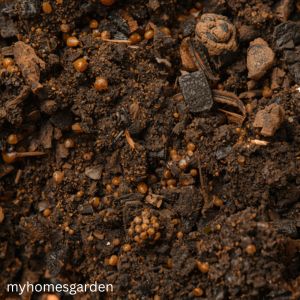
Its low density and particle density, as well as its high potassium concentration, make it valuable. It can hold and release nutrients to plants over extended periods of time. It also exhibits oxygenation characteristics.
Because of its high cellulose and lignin content, coco peat with such beneficial qualities is not advised for use in agriculture alone. However, when combined with additional compost and organic manure, it can work well as a soil substitute, plant nutrition supply, and culture medium in contemporary farming methods.
High levels of nitrogen, phosphorus, calcium, and magnesium are provided by the addition of vermicompost and cow dung manure. It gains antibacterial properties when neem powder is added.
Because of its properties, coco peat is commonly used among modern types of compost for gardening and is highly effective for compost for flowers and root development.
Methods:
Made from coconut husk, a byproduct of the coir industry, coco peat is also referred to as coir pith. Coco peat is made from coir waste from the coir industry and utilized in agriculture and horticulture.
Coco Peat and Compost Coco Peat’s Physiochemical Characteristics
| Parameters | Coco peat | Compost coco peat |
| Lignin | 30.0 | 4.80 |
| Cellulose | 26.53 | 10.10 |
| Organic Carbon (%) | 26.00 | 24.00 |
| Nitrogen(mg/kg) | 0.26 | 1024 |
| Nitrogen(mg/kg) | 0.01 | 0.06 |
| Potassium(mg/kg) | 0.78 | 1.28 |
| Ca(mg/kg) | 0.40 | 0.50 |
| Mg(mg/kg) | 0.36 | 0.48 |
| Water Holding Capacity (%) | 450.38 | 481.61 |
5. Mushroom Compost – Best Compost for vegetable Garden
- By-product of mushroom farming and one of the nutrient-rich organic compost types.
- Improves the structure of the soil making it useful for compost for soil improvement.
6. Cow Manure Compost – Organic Compost Types
Microbes found in composted cow manure are like microscopic garden warriors, making it one of the traditional types of compost for gardening.
In addition to fighting harmful species like microscopic worms that harm plant roots, these helpful bacteria aid in the supply of nutrients to plants.
You do not have to worry about damaging your new or old plants because this cow manure has already been composted.
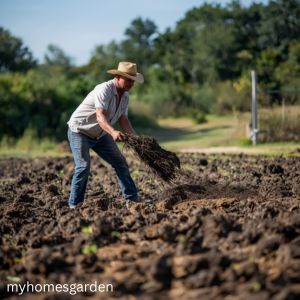
Additionally, because composted cow manure is entirely organic, its nutrients are released gradually, providing a ton of organic matter to your soil. Compared to using a chemical fertilizer for immediate, faster effects, this is far better for your plants in the long run.
Cow Manure Compost’s Advantages
- Conventional but incredibly successful
- Packed with organic materials and nitrogen
- Enhances the texture of the soil and supports compost for soil improvement.
- Ideal for: Farms and large gardens and works well as best compost for vegetable garden.
7. Leaf Mold Compost for Flowers
- Consisting of decomposing leaves, one of the natural organic compost types
- Outstanding for retaining soil moisture
- Enhances the aeration of the soil and helps in compost for soil improvement.
Conclusion
The production and health of your garden can be greatly impacted by the use of compost. Every kind of compost has special advantages that promote soil fertility and plant growth, whether it is nutrient-rich vermicompost, moisture-retaining coco peat, or environmentally friendly kitchen waste compost.
By understanding different types of compost for gardening and selecting the best compost for vegetable garden or compost for flowers, you can create a balanced system using effective organic compost types. You can choose the ideal compost for your particular requirements and establish a nutrient-rich environment with proper compost for soil improvement.
Using organic compost enhances the performance of your garden over time and encourages environmentally friendly and sustainable gardening techniques while maximizing key vermicompost benefits.