
Best Fertilizer for Flowering Plants: Tips for Healthy Blooms and Vibrant Gardens
Every homeowner aspires to have a lovely flower garden. However, despite the fact that it appears to be maintained at a high cost, one frequently finds a well-kept garden full with unimportant, little, and stunted flower plants.
In nine out of ten cases, this is because the original soil has been gradually deprived of its plant nutrients due to continuous cultivation and irrigation, eventually reaching a point where poor plant development and sparse growth are the standard rather than the exception. But this problem can solve by using best fertilizer for flowering plants.
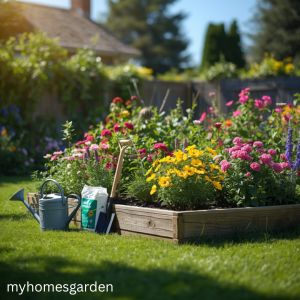
Using the fertilizer for flowering plants becomes crucial under these circumstances because it helps replenish key nutrients in the soil and promotes stronger growth, better foliage, and vivid blooms throughout the garden.
Vital Nutrient’s Significance
All of the essential plant nutrients should be present in a balanced amount in a good soil, but ongoing plant growth not only eliminates these nutrients but also causes the soil to lose its healthy physical composition. As a result, over time, continuous watering leads to the formation of a hard crust and the disappearance of the soil’s crumble structure. That is why using fertilizer for flowering plants is important.
Improving Soil Structure by the Use of Organic Matter
Applying thick coatings of farm manure and decomposing organic matter is the best way to improve the poor physical qualities. This will increase the amount of organic matter in the soil and improve its structure in addition to partially supplementing the nutrients required for plants.
This will prevent the formation of the hard crust that is frequently brought on by irrigation, make a loose, sandy soil stronger, and make a hard clay soil more crumble. Applying agricultural lime is another way to improve the structure of such a soil.
Application of Manure
Soon after being applied, the manure should be thoroughly decomposed and mixed into the soil. A decent application is 10 to 15 tons per maunds, or 2 to 3 lb. per square yard.
Phosphate Fertilizers
The fertilizer for flowering plants that is typically applied to soil that lacks phosphate is superphosphate (17.1%). One and a half ounces per square yard, or 800 to 1,000 pounds per morgen, may be used.
Bonemeal, on the other hand, is thought to be better for flower gardens than supers since it contains phosphate and nitrogen and acts more slowly. It can be applied in quantities of 1,000 pounds daily morning or 1.5 to 2 ounces per square yard.
Nitrogen Fertilizer
Ammonium sulphate or sodium nitrate (Chile saltpetre) are common nitrogen fertilizers that can be applied roughly half to three-quarters. Generally, brackish soil is treated with ammonium sulfate.
Potassium Fertilizers
One-fourth of an ounce per square yard, or 60 to 80 lb per morgen, can be used to apply potassium sulphate. The fertilizer for flowering plants listed above can be added to the soil individually or in combination. Potash can be skipped if agricultural manure has already been applied.
Applying Fertilizer Correctly
The fertilizer may be combined with sand or soil before to application if burning of plants as a result of high fertilizer dressings is a concern. Using a spade or fork, work the fertilizer for flowering plants into the soil after sowing it on the beds or plots.
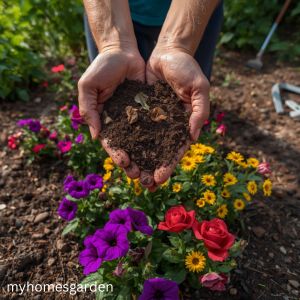
To avoid scorching the foliage and blooms of young or developing plants, it is best to apply all fertilizers dry. If the soil is not brackish, sodium nitrate (one-fourth oz. per square yard) may be added as the plants start to bloom. This might be provided as a weak solution.
The Greatest Organic Fertilizer for Flowers
Stable manure, kraal manure, or chicken dung are the ingredients of the liquid manure. It should be administered in a highly diluted form because concentrated manure is harmful to plants.
For example, one lb. of manure mixed with four gallons of water will not be too potent. Prior to adding liquid manure to the soil, always give the plants some water.
Farm manure is beneficial for plants that are prone to turning yellow due to the brackish soil or excessive brackish water application. If sprinkled at a rate of one-fourth ounce per square yard, iron sulphate which should not be considered a fertilizer will also aid in giving plants a healthy green hue.
Using a watering can, it can be sprayed on the plants at dusk. However, the strength of the solution should not exceed 1%. Weak plants are unable to generate lovely blossoms. This is an excellent example of best organic fertilizer for flowers in action.
Regular application of best organic fertilizer for flowers ensures a steady supply of nutrients for continuous blooms.
Best Natural Fertilizer for Flowering Plants
Gorgeous flowers and vibrant colors are the result of proper garden maintenance, which includes providing the right natural fertilizer for flowers.
Using natural fertilizer for flowers improves soil health naturally while promoting long-lasting blooms. Consistent use of natural fertilizer keeps plants strong and resistant to diseases, making it the preferred choice for eco-conscious gardeners.
Fertilizer For Perennials
You do not need to plant perennials again since once you do, they return each year. Unlike annuals, which live a single season, give their all, and die, perennials, when given the right care and conditions, return every year, frequently growing in size.
The life cycle of perennials naturally takes at least three years. Their varied bloom times, as well as their textures, colors, and forms, keep landscapes appearing lively and fresh.
However, they typically flower for shorter periods of time, with each type having its own timing. Perennials may maintain their beauty and vigor and be ready for future years with the right fertilizer for blooming plants.
Regularly applying fertilizer encourages bigger flowers and longer bloom periods. Using fertilizer for blooming plants during the growing season gives plants the energy to produce vibrant colors.
Perennial Flowers’ Ideal Fertilizer
Some perennials may have particular demands or preferences, but most would be content with a nice, all-purpose flower food or organic fertilizer. Because there is very little possibility of burning your perennial plants, utilizing natural, organic fertilizer is often the recommended approach.
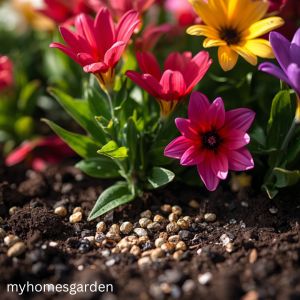
“Bloom Boosters” and other flower feeds can help strengthen root systems and encourage the production of more and bigger flowers. This is the ideal best fertilizer for perennial flowers.
Applying fertilizer for perennial flowers ensures perennials thrive year after year. Choosing the best fertilizer for perennial flowers helps maintain healthy foliage and consistent blooms.
Fertilizer with Slow Release for Flower Beds
For season-long feeding, capsule-type fertilizers with slow-release fertilizer for flower beds and delayed release can be used once a year. Because the capsules will not wash away, these are particularly effective in container gardens.
Using slow-release fertilizer prevents frequent fertilization and ensures nutrients are available throughout the growing season.
Slow-release fertilizer for flower beds is especially useful for busy gardeners, providing consistent nourishment without overfeeding plants.
How Frequently Should Fertilizer Be Applied to Perennial Plants?
Generally speaking, you should fertilize perennial plants at least twice a year, once in the early spring when new growth starts to appear and once more in the early fall. Additionally, a feeding is usually helpful if you trim a perennial back during the active growing season.
The plant will receive an additional boost from this feeding, which could result in another flush of blossoms and new growth.
Additional Useful Advice for Fertilizer for Flowering Plants
Take care not to overapply fertilizer for flowering plants. This could burn the plant tissue or possibly kill the plant. To prevent toxicity issues, thoroughly read product labels and adhere to instructions.
If you are too concerned about your plants becoming overly fertilized, you might want to use a light natural or organic fertilizer. Natural materials like composted manures or other organic debris are used to make organic fertilizers, which have a far lower chance of burning your plants.
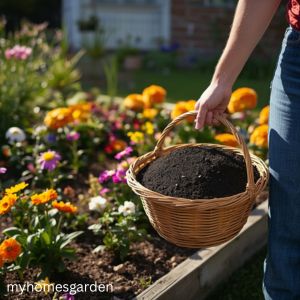
Excess nitrogen (the first number on a fertilizer package) may speed up the growth of perennial plants, but it may also increase leaf growth, reduce flower production, or cause harmful or fatal diseases. Therefore, fast-acting fertilizers with a high nitrogen content are ideal.
Generally speaking, plants that develop more slowly require less fertilizer. Sedum and other succulents are among the plants that need little to no fertilization.
In general, plants that are bearing a lot of fruit or flowers require more fertilizer.
Techniques for Applying Fertilizer for Flowering Plants
Depending on the crop’s requirements and the fertilizer’s formulation, there are various ways to apply fertilizer for flowering plants. The methods for applying fertilizer to a garden area are described by the following terminology.
Broadcast
Prior to planting, the material is evenly distributed throughout the soil’s surface. If fertilizers are applied to the top 3 to 4 inches of the soil, plant roots will have easier access to nutrients.
Band
A trench that is two to three inches deep is filled with fertilizer. A hoe’s corner is a useful tool for creating trenches. The seeds are planted 1-½” to 2″ above and beside the fertilizer.
The plant roots swiftly take up the nutrients as they grow into the fertilizer band.
Side-dress
Some crops may require more fertilizer once they have begun to grow. The typical side-dress element is nitrogen, but it is “better late than never” if other nutrients were left out of previous applications.
The fertilizer is applied in close proximity to the developing plant. It is not necessary to incorporate nitrogen into the soil because it is highly soluble. Lightly apply a “complete” fertilizer that contains potash, phosphate, and nitrogen, being careful not to harm near-surface plant roots.
Before the plant can absorb the nutrients, irrigation water must be applied. To avoid burning, keep fertilizer particles away from the foliage.
Solutions for Transplants
Particularly in the early spring when soils are chilly, diluted solutions of complete fertilizers strong in phosphate encourage rapid recovery and early growth.
Sprinkler or Drip Watering
Sprinkler or drip systems can be used to apply soluble fertilizers. Fertilizer can be added to water via irrigation pipes using a variety of injectors. To lessen the possibility of nitrogen leaching, inject fertilizer during the second half of the irrigation schedule.
Conclusion
The proper application of fertilizer for flowering plants is crucial to a lovely and flourishing landscape. Selecting the right kind of best fertilizer for flowering plants guarantees that flowers get the nutrients they need for robust growth, vivid hues, and extended blooms.
Incorporating the best organic fertilizer for flowers enhances soil structure, encourages healthy root development, and replenishes nutrients. By improving soil fertility naturally, using natural fertilizer for flowers increases plants’ resistance to environmental stress and disease.
Choosing the right best fertilizer for perennial flowers guarantees that your long-term investments will continue to blossom and be beautiful. Frequent applications of fertilizer for blooming plants encourage profuse flowering and support the maintenance of luxuriant foliage throughout the growing season.
For flower beds, using slow-release fertilizer for flower beds is the best way to ensure that your garden thrives with little work, maintains a steady supply of nutrients, and decreases the chance of overfertilization.

Hi! Ramisha Ali here, the co-founder of MyHomesGarden, a platform dedicated to providing beginner-friendly home and garden tips. With a passion for creating beautiful, green, and comfortable living spaces, I writes research-based articles on home decor, indoor and outdoor plant care, container gardening, and DIY home improvement.
My mission is simple to make home and garden care accessible to everyone, regardless of experience level.
“Because every home deserves a little magic — and a lot of green.